
We Don’t Get Anywhere Alone
What a scenic reservoir and glasses of "non-intervention" wine taught me about grief

This past week I let everything in my life slow down. I spent six days in the Catskills, visiting my dear friend Fara Warner, who welcomed me into her home, which includes two acres of lush woods and a variety of gardens. Over the course of our time together, I accompanied her on life errands, and she showed me some of her favorite spots in a place other people mostly visit on vacation.
Most evenings, Fara cooked on the grill. We made great fresh salads, drank delicious local wines and watched silly movies we will never admit to having seen. We’ve known each other almost 20 years now — we’ve worked together, laughed together, explored together, grieved together. We drift sometimes, out of each other’s daily routines, the way friendships do when miles stretch between us and work always looms. But the core of our connection remains deeply rooted, no matter our location.
On Sunday afternoon, Fara ferried me to Whitecliff Winery, where the best bottles on the list are labeled “non-intervention” — grown and made with as little human interference as possible. It sounds effortless. It isn’t. The owner, Michael Migliore, started growing grapes on that land in the late 1970s, working out which varieties could survive Hudson Valley winters through years of trial and error. Today, his wife runs the business side and their winemaker has been there since 2010. “Non-intervention” wine, it turns out, takes a lot of people intervening for a long time first.
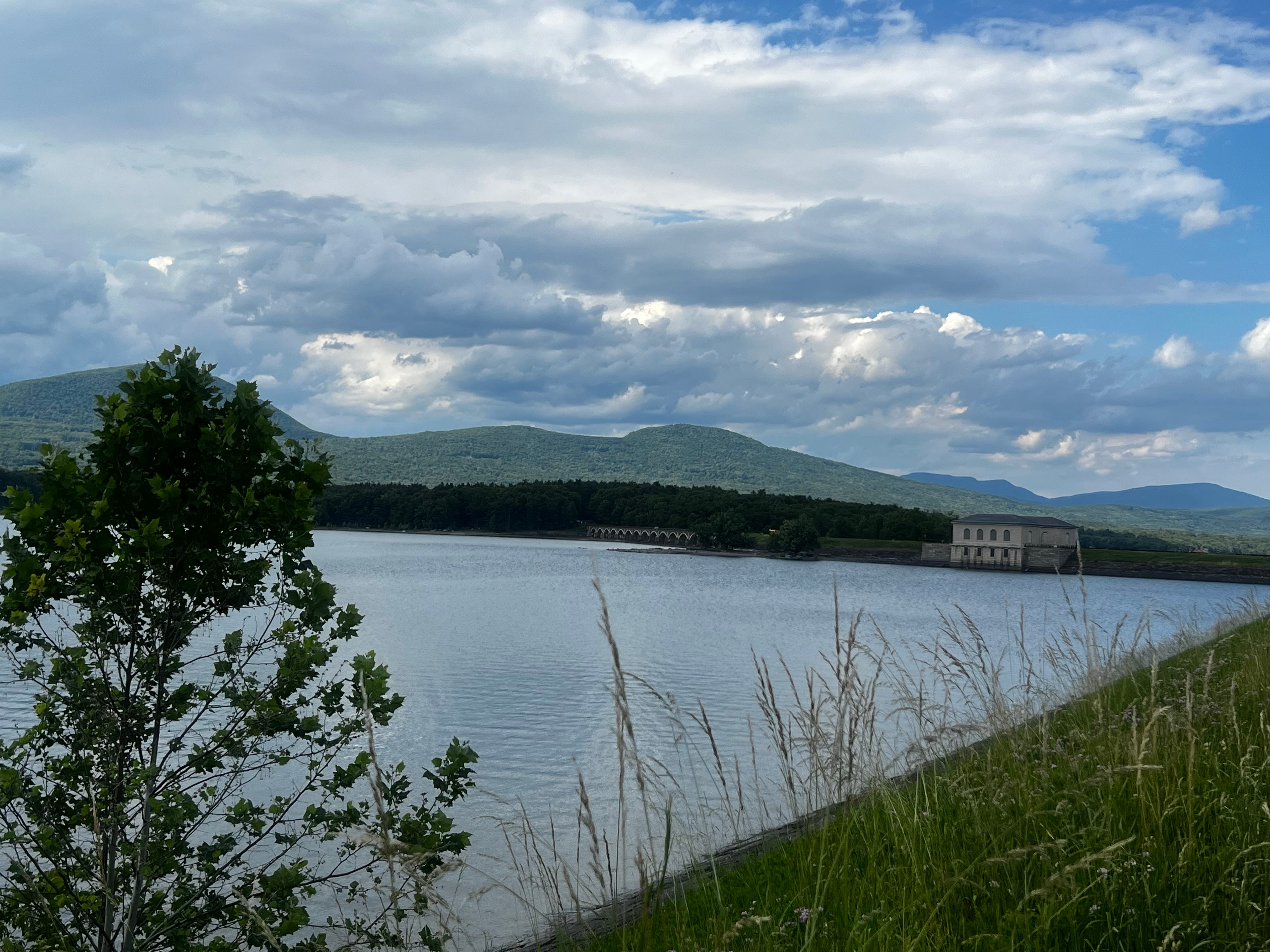
Another day took us to the nearby Ashokan Reservoir, which provides 40 percent of New York City’s water supply. This trip, I learned that entire towns were flooded a century ago so New York City could have that water. Families and neighbors packed up generations of life — homes, churches, mills, whole hamlets — so residents in a city more than 100 miles away could turn on their taps and never think about it. Turns out even the dead didn’t get to stay where they were laid. Thirty-two cemeteries sat in the reservoir’s path, and the graves were dug up and moved before the water came in. At one relocation site, Bushkill Cemetery, the gravestones don’t even carry names — just codes marking which original cemetery each person came from.
Archaeologist April Beisaw, who’s spent over a decade documenting what’s left of these communities, stood at one of those sites and said simply, “This was a cemetery.” Now it’s a wetland. The people are still there. Almost no one remembers why.
It was when talking with Fara — about A Picture’s Worth, the nonprofit we co-founded, and about the long, slow work of trying to hold a community’s memory in one piece — that the right words finally rang so loudly and clearly I grabbed my phone to record them in Notes:
We don’t get anywhere alone.
I keep coming back to that reservoir, and to that wine, and to Fara’s porch. None of it happened the way it looks from the outside. The wine looks like nature left alone. The water looks like it just appears, clean, when you turn on the tap. Twenty years of friendship can look, from a distance, like two people who just happened to stay close. None of that is true. The wine took 30 years and three people dedicated to making it work. The water took the lives of towns nobody downstream ever has to think about. The friendship took every bit of the work, the laughter, the drifting, and the grieving — done together, on purpose, over and over.
That’s the lie we tell about caregiving and grief, too. We’ve built a whole story describing both as heroic, solo endeavors — struggles you grit your teeth through alone, struggles that are supposed to make you stronger if you can just carry them by yourself long enough.
But nothing here happens alone. Not the wine. Not the water. Not a friendship that’s lasted 20 years through every kind of season. Caregiving doesn’t either. Grief doesn’t either. The people who drop off a meal, who bring a soft blanket to the hospital waiting room, who keep saying your person’s name after everyone else has stopped — they’re your reservoir.
And even if we don’t always see them, they’re already inside us — the way those flooded towns are inside every glass of water a New Yorker drinks without knowing it. That’s what grief gives us, if we let people stand in it with us: not just survival, but the ongoing, quiet presence of everyone we’ve loved, still doing the work of keeping us alive.
this is lovely and a great reminder that we don't do this alone